Investing guided by evidence

Every investor would like certainty. We would like to know which markets will perform best next year, which funds will outperform, and when the next market downturn will occur. Financial advertisements and media headlines often imply that you can do so. Unfortunately, few possess the ability to make such predictions with any reliability. Investing, therefore, is ultimately an exercise in making decisions under uncertainty.
The good news is that successful investing does not require certainty. It requires making a series of sensible decisions that stack the odds – sometimes only very marginally - in your favour.
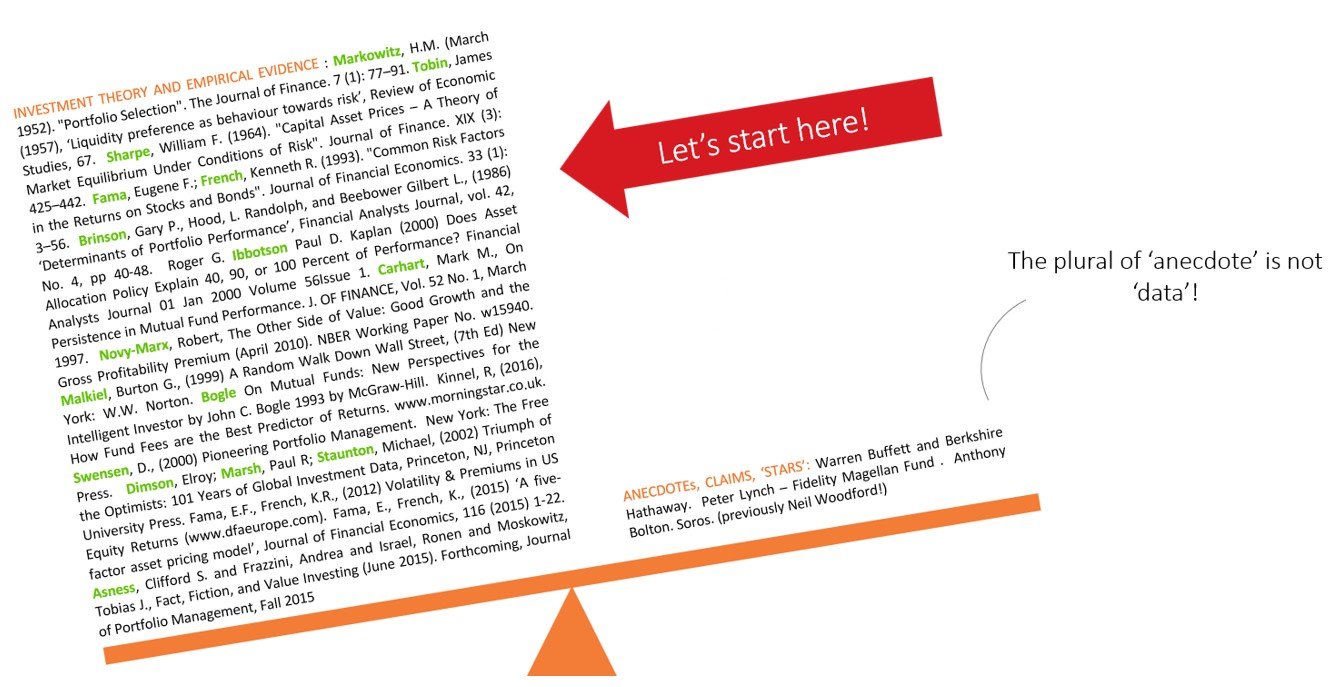
Figure 1: Start with the evidence | Source: Albion Strategic Consulting
No single decision guarantees success. However, when a collection of sensible decisions is combined into a disciplined investment process, investors give themselves a far greater chance of achieving good long-term outcomes.
This note explores some of the key decisions that shape our investment process and examples of some of the evidence that underpins them. It is worth noting that this note only scratches the surface of the vast amount of evidence that has been considered in the approach.
Choice 1: Own productive assets or remain in cash
Our choice: Own productive assets and participate in the rewards of capitalism
When you invest in shares, you become a part-owner of businesses that employ people, develop products, provide services and – hopefully - generate profits. Over time, successful businesses create wealth and pass some of that wealth to their owners through dividends and rising company share prices.
History provides compelling evidence that ownership has been rewarded. Global equities have delivered substantially higher long-term returns than cash and bonds, albeit with greater short-term uncertainty.
Evidence:
Over the period from 1979 to 2025, global equities generated annualised after-inflation returns of approximately 7.8% per year compared with around 2.4% from high-quality bonds[1]. After these figures have compounded over this time period, this difference is ten-fold.
Choice 2: Build robust portfolios or forecast markets
Our choice: Accept that markets are difficult to second-guess and build robust portfolios
Financial markets are highly competitive environments containing millions of participants, all attempting to interpret the same information. If opportunities for easy profits appear, they tend to be quickly identified and acted upon by investors.
Rather than trying to predict short-term market movements, we believe investors are generally better served by accepting uncertainty and constructing robust portfolios that can participate in the long-term growth delivered by markets. This means spending more time focusing on decisions that are within our control, rather than trying to make predictions.
The evidence for this approach is difficult to ignore. The majority of active fund managers fail to outperform the market benchmarks they are attempting to beat over longer periods, particularly once costs are taken into account.
Evidence:
The choice and adherence to a long-term asset allocation is the core driver of portfolio risk and return. Active winners and losers largely cancel each other out, leaving exposure to asset classes as the dominant determinant of outcomes.[2].
Choice 3: Diversify or concentrate
Our choice: Diversify widely
Nobody knows with any certainty which company, country, sector or investment style will be the best performer in advance. Diversification is the most effective solution to combat this uncertainty.
Today's global market contains tens of thousands of companies operating across a vast range of industries and regions. Owning a broad collection of these businesses provides exposure to the collective ingenuity and productivity of the global economy, rather than relying on a handful of individual success stories. Thankfully, there are plenty of low-cost and efficient ways for investors to do so, through collective investments such as funds.
Evidence:
Just 4% of listed companies that have existed since 1926 have delivered all of the market returns. Most underperformed cash[3]. Therefore, investors need to be sure they are owning those companies that will prosper – the cleanest way to do this is to diversify broadly.
Choice 4: Reduce costs or search for expensive talent
Our choice: Keep costs low, but not at the expense of quality
Costs are one of the few aspects of investing that can be controlled with certainty.
Every pound paid in fees, trading costs and taxes is a pound that is no longer working on behalf of the investor. Those seemingly small deductions can compound into substantial differences in outcomes over time.
A useful way to think about investing is that, before costs, investors collectively earn the market return. Once costs are deducted, investors as a whole must earn less than the market return. Therefore, lower-cost investors begin the race with an advantage over higher-cost investors.
Evidence
An investment strategy’s cost is often the most reliable predictor of its outcome, with lower fees relating to better outcomes[4].
Choice 5: Prefer rewarded risks or own the market portfolio
Our choice: Tilt towards rewarded risks
This is a nuanced, but key, point. While broad market exposure is a sensible starting point for any investor, not all companies are identical and the evidence strongly suggests that modest tilts towards areas of the market where investors have historically been rewarded for bearing additional risk can improve expected outcomes.
Decades of academic research suggest that certain groups of companies have historically delivered higher returns than the broader market over long periods. Examples include smaller companies and companies trading at lower valuations relative to their fundamentals (value companies).
These characteristics do not generate higher returns every year, nor are they expected to (if only investing were that easy!). However, because they are generally associated with greater economic risk, investors have historically been rewarded for owning them.
Evidence
Since 1972, smaller and value companies have outperformed a broad market portfolio by 1-2%[5] per year. This is material.
Choice 6: Be patient or react to markets
Our choice: Be patient and take a long-term view
Every generation of investors experiences periods that feel different, dangerous and unprecedented. Yet market declines, recessions, geopolitical events and economic crises have always been recurring features of investing, from Tulip Mania in 1637 through to the more recent pandemic-induced stock market fall in 2020.
The temptation during difficult periods is to act. Unfortunately, investors often make decisions at precisely the wrong moments, becoming enthusiastic after markets have risen and fearful after they have fallen. Evidence consistently shows that poor investor behaviour can be damaging to long-term returns.
Evidence
Investors engaging in activities such as chasing performance and panic selling see returns, on average, 1.2% below those that held fast[6].
Choice 7: Maintain discipline or let risk drift
Our choice: Rebalance systematically
If equities rise strongly, they naturally become a larger proportion of the portfolio, and vice versa. Without intervention, the level of risk being taken can gradually move away from what was originally intended. Rebalancing involves periodically restoring allocations to their target weights.
At times it can take a strong stomach to sell out of rising markets and to buy into falling markets, yet this provides a contrarian, buy-low, sell-high strategy, which maintains the portfolio at a risk level selected with the client in the first place.
Evidence:
Left unrebalanced, in just 10 years between May-16 to Apr-26, a portfolio with 60% invested in stocks could have drifted to as much as 80% in stocks[7]. This is now a materially different solution.
Choice 8: Own the right assets poorly or own them efficiently
Our choice: Use high-quality funds and implementation
Even the best investment philosophy can be undermined by poor implementation. Once decisions have been made regarding asset allocation, diversification and portfolio structure, those decisions must be executed effectively.
We therefore seek funds that are highly diversified, systematically managed and focused on capturing the returns available from the asset classes they represent. Our objective is not to find the next star manager or chase recent winners. Instead, it is to provide investors with an efficient and reliable way of accessing the returns that markets have to offer.
To do so requires a deep, regular and detailed approach to searching across hundreds of thousands of possible options. As an independent firm, we have the freedom to make the choice of the best in class funds based on this comprehensive process.
Evidence:
Over 20 years, just 2% of the starting universe of thousands of professional fund managers were able to beat a fair benchmark after costs and accounting for the risks taken[8]. Attempting to choose funds or fund managers based on past performance alone is likely to result in disappointment.
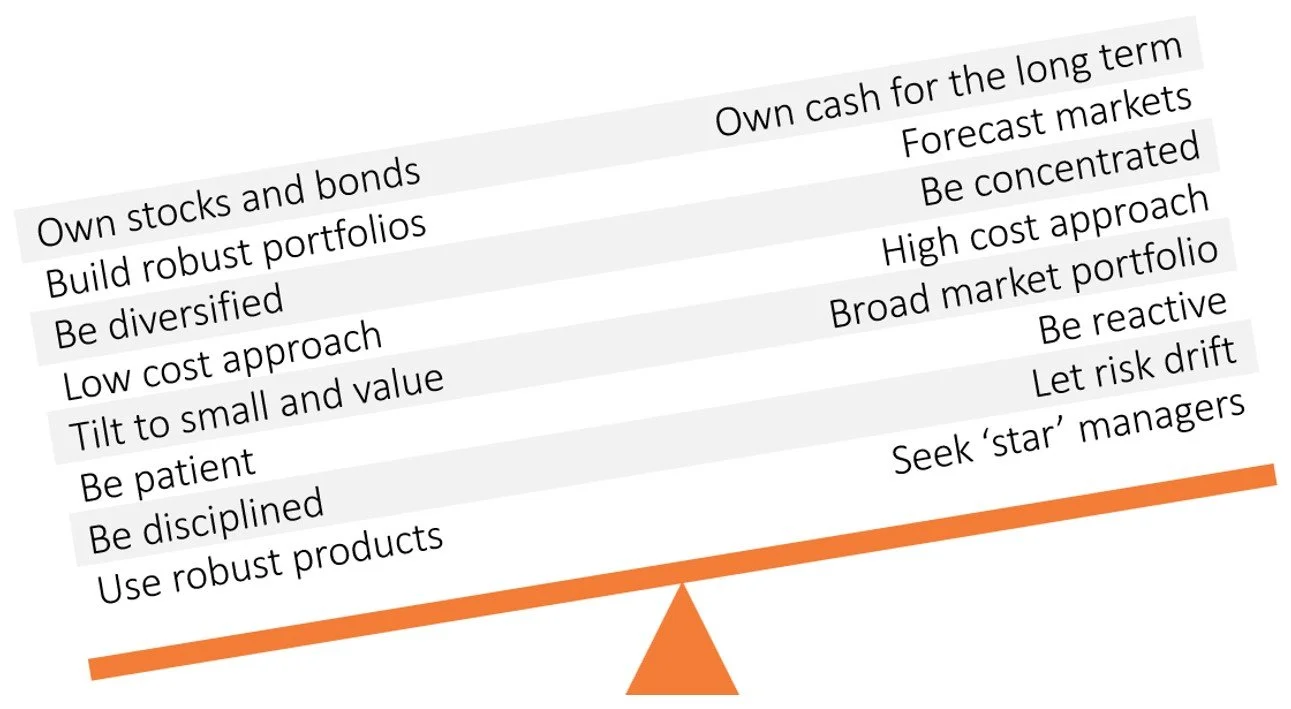
Figure 2: Stack the odds in your favour | Source: Albion Strategic Consulting
While no investor can control market outcomes, all investors can control the decisions they make. Guided by evidence, those decisions can be structured to give investors the best possible chance of long-term success.
[1] Inflation: UK RPI (31/01/88), UK CPI (thereafter). Bonds: Albion Short Gilt Index (0-5). Equities: Albion World Stock Market Index. Returns in GBP after inflation. Period: 02/79 - 12/25.
[2] Ibbotson, Roger G., and Kaplan, Paul D., (2000) ‘Does Asset Allocation Policy Explain 40%, 90% or 100% of
Performance?’ Financial Analysts Journal, Vol. 56, No.1
[3] Bessembinder, Hendrik (Hank), One Hundred Years in the U.S. Stock Markets (March 18, 2026). Available at SSRN: https://ssrn.com/abstract=6438198
[4] Kinnel, R, (2016), How Fund Fees are the Best Predictor of Returns and subsequent work by Ptak, J (2025), What Worked for Fund Investors? Pinching Pennies and Letting Winners Run
[5] Albion Research Indices. Albion Developed Stock Market/Value/Small Index. See smartersuccess.net/indices for more details.
[6] Morningstar (2025), Mind the Gap: Why do investors experience a return gap?
[7] Data source: Albion World Stock Market Index and Albion Global Short Bond Index (0-5, GBP), before inflation. May-16 to Apr-26.
[8] SPIVA® U.S. Scorecard Year-End 2025. 20-year results for ‘All Domestic Funds’ category. Risk adjusted figures.