Turmoil in the Middle East — But Not in Your Portfolio
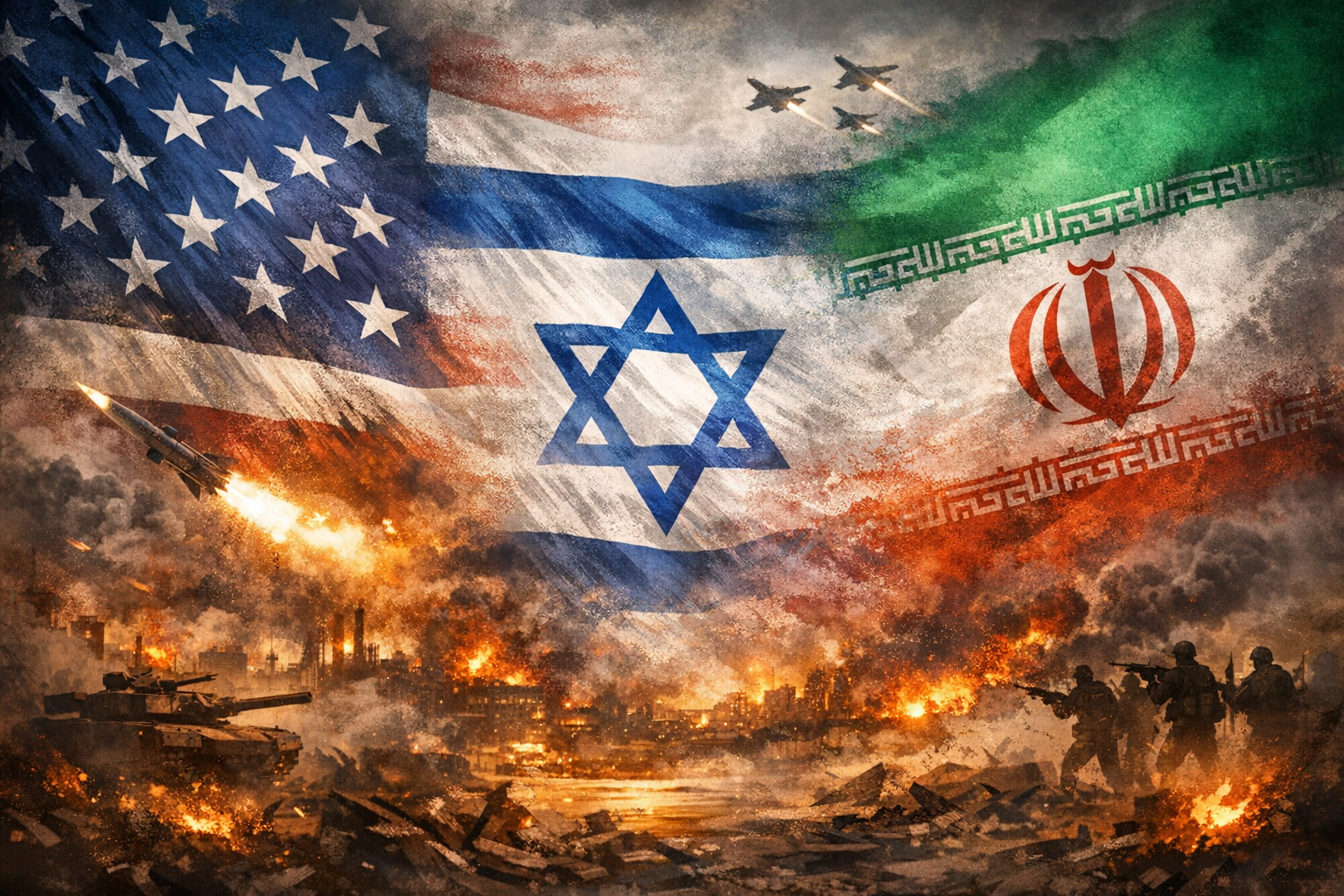
When headlines turn dramatic, it’s natural for investors to feel uneasy. The recent escalation between Israel, the United States and Iran — including coordinated strikes and multiple retaliations across the region — has dominated global news cycles and understandably raised questions.
Naturally, first and foremost my thoughts are with the people directly affected. From an investment perspective, however, the story is far more measured than the headlines suggest.
The key message for long‑term investors: global markets remain calm, and well‑diversified portfolios continue to be resilient, even as events in the Middle East evolve.
What’s Happening — and Why Markets Haven’t Panicked
Since 28 February, Israel (supported by the U.S.) launched targeted strikes on Iranian military infrastructure, and Iran responded with waves of missiles and drones across several countries. It is, by any measure, a significant geopolitical moment.
Under normal circumstances, you might expect markets to react sharply. But something surprising — and reassuring — has happened:
Markets have barely moved.
The S&P 500 is down only about 1.5% over the past five days.
Global equities are virtually flat at –0.11% over the same period.
The VIX, Wall Street’s “fear gauge,” has risen only modestly to around 24, well within normal ranges for geopolitical tension.
These numbers reflect a critical truth:
Markets price probabilities, not headlines.
Investors care less about dramatic news and more about whether something fundamentally alters the economic outlook — things like global growth, corporate earnings, interest rates, inflation, and long‑term demand. So far, markets appear to be treating the conflict as a geopolitical shock, not a structural economic shift.
Earnings, policy and global financial conditions remain stable
At present:
Corporate earnings expectations are intact
Central bank policy has not dramatically shifted
Global financial conditions remain healthy
Supply chains and key trade routes continue operating, albeit with regional challenges around the Straits of Hormuz.
Unless we see sustained disruption to global energy supply or trade, long‑term fundamentals for global companies remain unchanged.
Volatility is normal — crisis is not
In uncertain times, market moves can “feel” bigger than they are. A day or two of turbulence is entirely normal and historically insignificant. What matters isn’t what markets do this week — it’s how you stay invested through the cycles.
Markets tend to absorb shocks faster than expected
Although uncertainty can spike volatility in the very short term, markets often stabilise more quickly than anticipated. In this weeks early reactions, crypto assets fell sharply while oil and gold saw modest safe‑haven buying. But it is notable that major equity markets have remained steady.
Historically, even significant military conflicts—including those in the Middle East—rarely lead to long‑term, sustained market downturns. Markets price in risk rapidly, and diversified portfolios spread that risk across sectors, regions, and asset classes.
Oil price spikes are usually temporary
While the Middle East plays a critical role in global oil supply, past conflicts have shown that supply disruptions are often limited or short‑lived, despite tanker congestion, geopolitical caution and uncertainty around the Strait of Hormuz.
Even where oil prices temporarily rise, diversified portfolios typically include assets that benefit from higher energy prices, balancing the overall impact.
Diversification smooths regional volatility
Although Iran, Israel, and the surrounding region may experience pronounced economic and market turbulence, most clients hold next to no exposure to these specific markets. Global portfolios are deliberately designed to avoid concentration risk and reduce sensitivity to any single geopolitical event. Short‑term swings are a natural feature of markets. The most important determinant of long‑term financial success is not avoiding volatility, but remaining invested through it.
Even though this weeks developments are significant, they do not alter the long‑term growth potential of global companies, emerging technologies, or the broader global economy.
A Moment for Perspective, Not Reaction
Periods like this test behaviour more than they test portfolios. It’s human nature to want to “do something” when headlines escalate — but reacting impulsively to fast‑moving geopolitical events has historically been one of the quickest ways to harm long‑term outcomes.
Markets are forward‑looking and absorb new information rapidly. By the time a headline breaks, markets have usually priced in much of the risk already.
The most effective strategy remains the simplest: Stay diversified, stay invested, and stay focused on the long-term plan.
If you do have concerns about how unfolding global events may impact your planning or your portfolio feel free to get in touch via the link below.