Your adviser as your investment coach - Part 1

Your adviser plays a key role as your investment coach. This series of short notes will explore six ways that a good adviser will bring true value to a client’s investment programme.
· Value level 1: Establish your guiding principles
· Value level 2: Build a robust portfolio for all seasons
· Value level 3: Maintain the efficacy of the portfolio and avoid fads
· Value level 4: Providing support and guidance along the way
· Value level 5: Instilling the fortitude and discipline to rebalance
· Value level 6: Doing the boring stuff
This note delves into the first of these value levels: Establish your guiding principles.
Value level 1: Establish your guiding principles
While many investors tend to start the process by thinking about what they should invest in, the true starting point should be to focus on how to invest. To do that we need to spend some time establishing the guiding principles and good investment practices that will underpin all the investment decisions that an adviser will make with you, now and in the future.
Investing is a journey and these principles and practices act as a compass to steer us through the maze of choices, emotions and challenges that as investors we will undoubtedly face in the coming years. We call this our investment philosophy. As the late David Swensen - CIO of the Yale University Endowment and one of the most highly regarded institutional investors in the world - stated:
“Successful investors operate with a coherent investment philosophy that they apply consistently to all aspects of the portfolio management process. Philosophical principles represent time-tested insights into investment matters that rise to a level of enduring professional convictions.”
Our philosophy focuses on accepting that markets do a good job of incorporating information into the prices of companies’ shares (stocks) and bonds. Guessing which companies (or markets) will do well or poorly is a very hard and low probability strategy. As such, we do not have to worry about which stocks to pick or to try to time when to be in or out of markets, as these are largely random in outcome.
We therefore seek to capture the returns that markets can deliver, avoiding the hollow promises of active fund managers who seek skill-based, market-beating returns. The evidence suggests that their ability to do so is very limited and hard to identify in advance. As the legendary investor Warren Buffet put it in his 2014 letter to shareholders:
“Active trading, attempts to “time” market movements, inadequate diversification, the payment of high and unnecessary fees to managers and advisors, and the use of borrowed money can destroy the decent returns that a life-long owner of equities would otherwise enjoy.”
And
“Market forecasters will fill your ear but will never fill your wallet.”
The graphic below demonstrates this hard truth. Over 20 years a majority of professionally managed active funds failed to survive. Of those that did survive only a minority (14%) beat the market, and of those only around half outperformed after accounting for the risk taken. These risk-adjusted outperformers account for just 2% of the starting sample of funds. Attempting to choose these funds in advance is an exceptionally difficult – perhaps impossible - task.
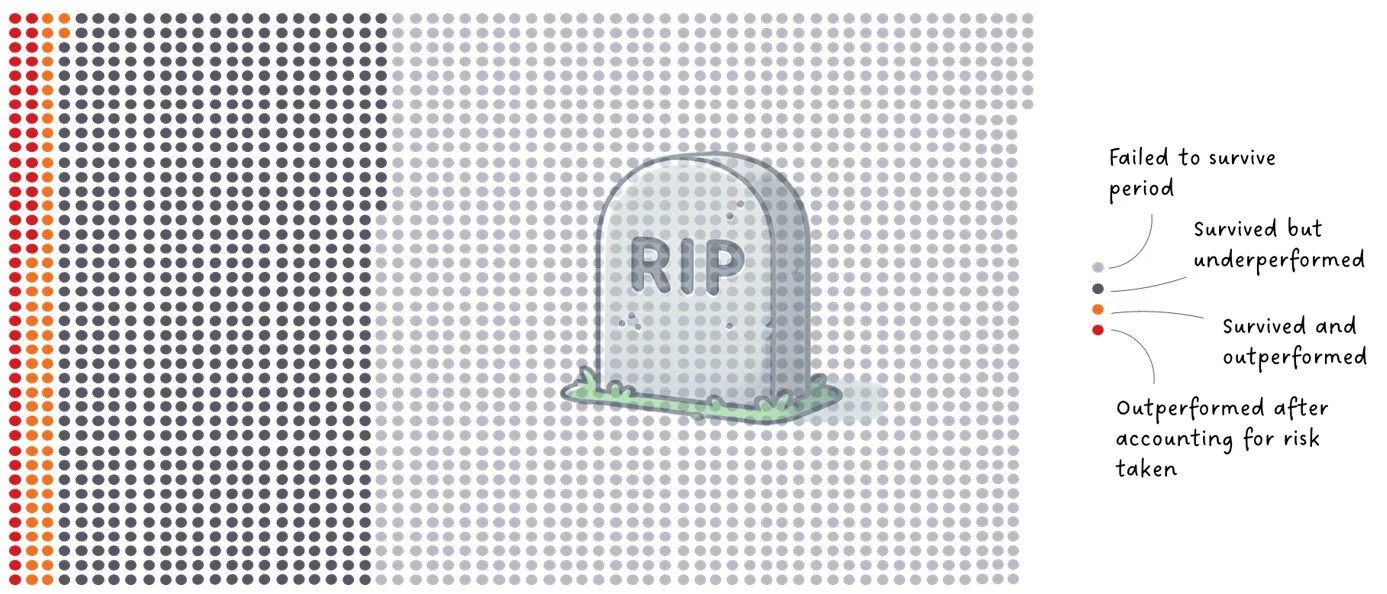
Figure 1: Assessing active manager outcomes over 20 years
Source: Albion Strategic Consulting. Data source: SPIVA® U.S. Scorecard Year-End 2025. 20-year results for ‘All Domestic Funds’ category.
Finally, being both patient and disciplined is required, but difficult for most to accomplish on their own. Once an investor realises generating good long-term returns takes time, patience and belief in the markets, it is essential to put in place the discipline to stop oneself succumbing to impatience and ill-discipline.
A good adviser will have a sensible investment philosophy that will provide a valuable compass on your investment journey.