You don't need bonds… until you need them
The Fullback in your portfolio

When share markets are on a tear, it's hard to say anything nice about bonds.
They don't make headlines or show up in pub conversations about who made what. Clients ask me every year why they own them. With equities climbing, it can feel like the bond holding is just dead weight that's holding the portfolio back.
That's exactly how bonds are supposed to feel. But like a rugby fullback, bonds have an important defensive role to play.
High-quality bonds aren't there to make you rich. Equities do that job. Bonds are there to steady the portfolio when shares are falling, and to give you something to draw on so you aren't forced to sell equities at the worst moment.
You can spend years wondering why you own them, then be very glad you did. The catch is that nobody knows in advance when that moment will come.
🛡️ Think of it as an insurance premium
Owning bonds has a cost. Every pound in bonds is a pound that isn't in equities, so you'll capture less of the upside in strong markets.
The long-run numbers make the point. From 1979 to the end of 2025, after inflation, £100 in global equities grew to around £3,040. The same £100 in short-dated gilts grew to around £310.
So why own any bonds at all? For the same reason you insure your home. You might pay buildings insurance for decades and never claim, but the cover wasn't wasted. It protected you against something you couldn't easily absorb on your own.
How much of that premium you should pay depends on you. It's a balance between the return you need to fund your life and how well you can cope with big swings in value, both financially and emotionally. Getting that balance right is a big part of what good financial planning does.
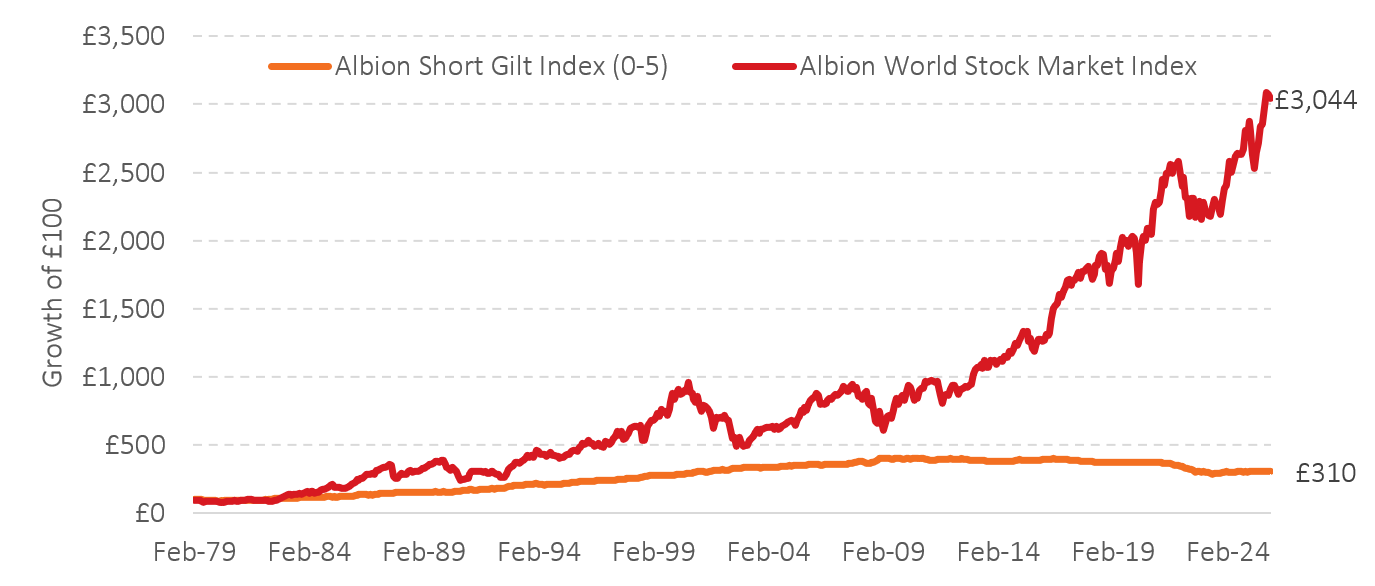
Figure 1: Owning bonds carries the cost of missing higher expected returns available from stocks. Sources: Albion Strategic Consulting. Data source: Inflation: UK RPI (31/01/88), UK CPI (thereafter). Bonds: Albion Short Gilt Index (0-5). Equities: Albion World Stock Market Index. Returns in GBP after inflation. Period: 02/79 - 12/25.
📈 Higher yields aren't automatically bad news
Bonds are back in the news. The 10-year US Treasury yield recently went above 5%, a level last seen before the financial crisis. Commentators have offered plenty of explanations, including stubborn inflation, government borrowing and heavy corporate debt issuance.
Rising yields push down the price of bonds you already hold. They also mean new money and reinvested income earn more from here on.
What higher yields don't tell you is where yields go next. They might rise further, fall back or stay where they are. Today's price already reflects everything the market knows.
🔄 Diversification is not a promise of opposite moves
People often expect bonds to go up whenever shares go down. Sometimes they do, but that isn't a rule.
Correlation is a measure of how closely two investments move together. A positive figure means they tend to move in the same direction, and a negative one means they tend to move in opposite directions. Over the last 12 months the correlation between global shares and bonds has risen to about 0.7. Recently, they've been moving largely in step.
That can be uncomfortable, because both halves of a portfolio can fall (or rise) together. But it has happened before, and it doesn't mean diversification has stopped working.
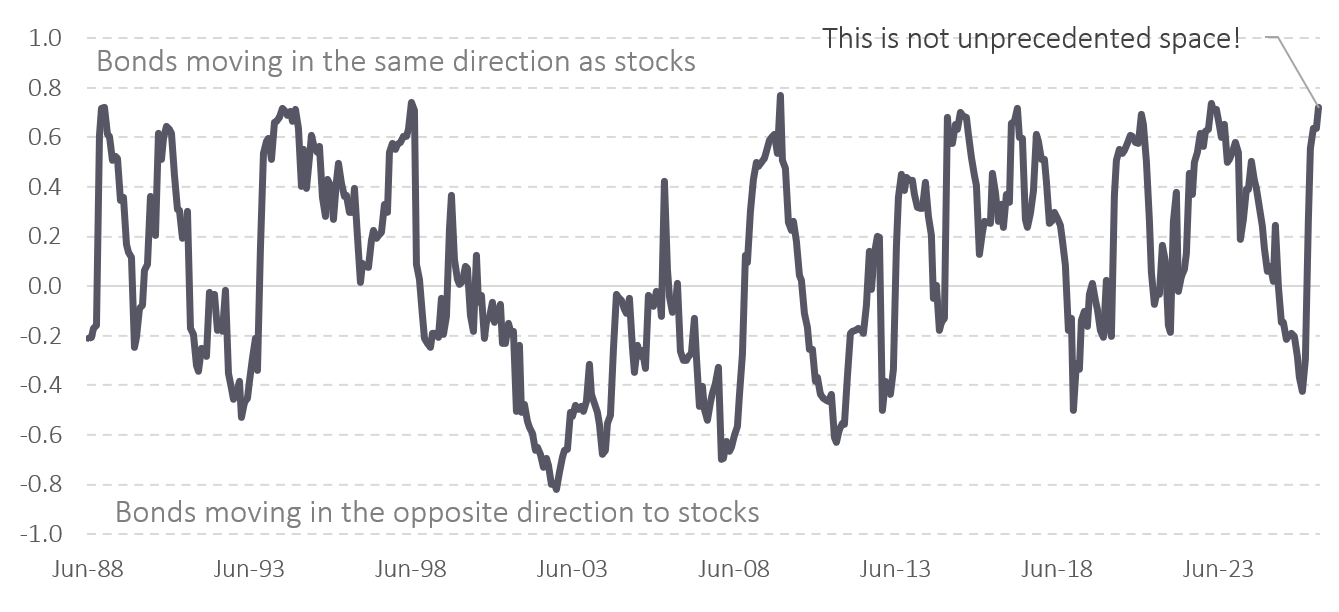
Figure 2: 1-year monthly rolling correlations between global stocks and bonds, Jan-88 to Jul-26 Source: Albion Strategic Consulting. Data source: Albion Research Indices (see smartersuccess.net/indices for more details). Global stocks: Albion World Stock Market Research Index. Global bonds: Albion Global Short Bond Index (0-5, GBP). Monthly data in nominal terms, in GBP.
🔮 Forecasting is not a strategy
When markets shift, people want to do something. Should you lock in longer-dated bonds while yields are high? Should you avoid bonds until things settle down?
These sound like sensible questions. Answering them profitably means calling both the direction and the timing of the market, again and again.
The evidence says that's very hard. According to S&P's SPIVA data to June 2026, only about 13% of US investment-grade bond fund managers beat their benchmark over 20 years. The other 87% didn't.
✅ What bonds should look like in a sensible portfolio
Bonds don't all protect you equally. Longer-dated bonds are more sensitive to interest rate changes, and lower-quality bonds can behave a lot like equities, often at the worst time.
The defensive part of a portfolio should be deliberately boring:
High quality: lending to creditworthy governments and companies, so the payments you're promised are very likely to be made.
Short-dated: keeping maturities short limits the damage when interest rates move sharply.
Globally diversified and currency-hedged: spreading across many issuers and countries, with the currency risk removed so the holding stays genuinely defensive.
Here's what that looks like when equities have their worst moments:
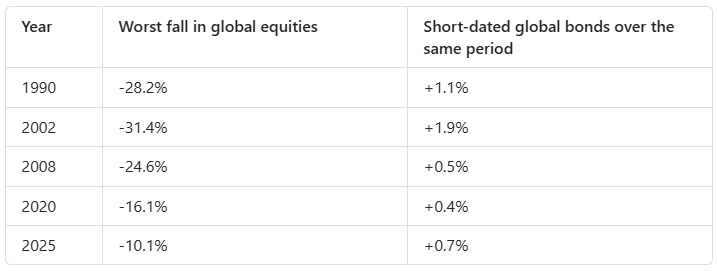
Figure 3: Bonds continue to do what bonds do best, Jan-88 to Jul-26. Source: Albion Strategic Consulting. Data source: Albion Research Indices
Bonds don't always rise when shares fall. In every calendar year from 1988 to July 2026, though, the worst result for bonds during the biggest equity fall was a loss of about 2%. Equities have fallen by as much as 31% in a single year.
The bottom line
Nobody owns bonds expecting them to be the star of the portfolio every year. You own them because every so often, usually when you need it most, they are.
If you have questions about anything in this article, concerned about the role bonds have in your own portfolio or your own wider investment strategy then feel free to get in touch via the link below.